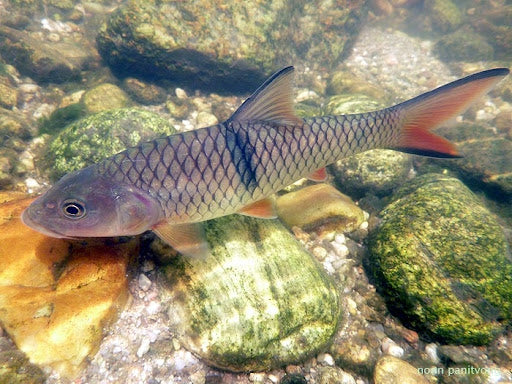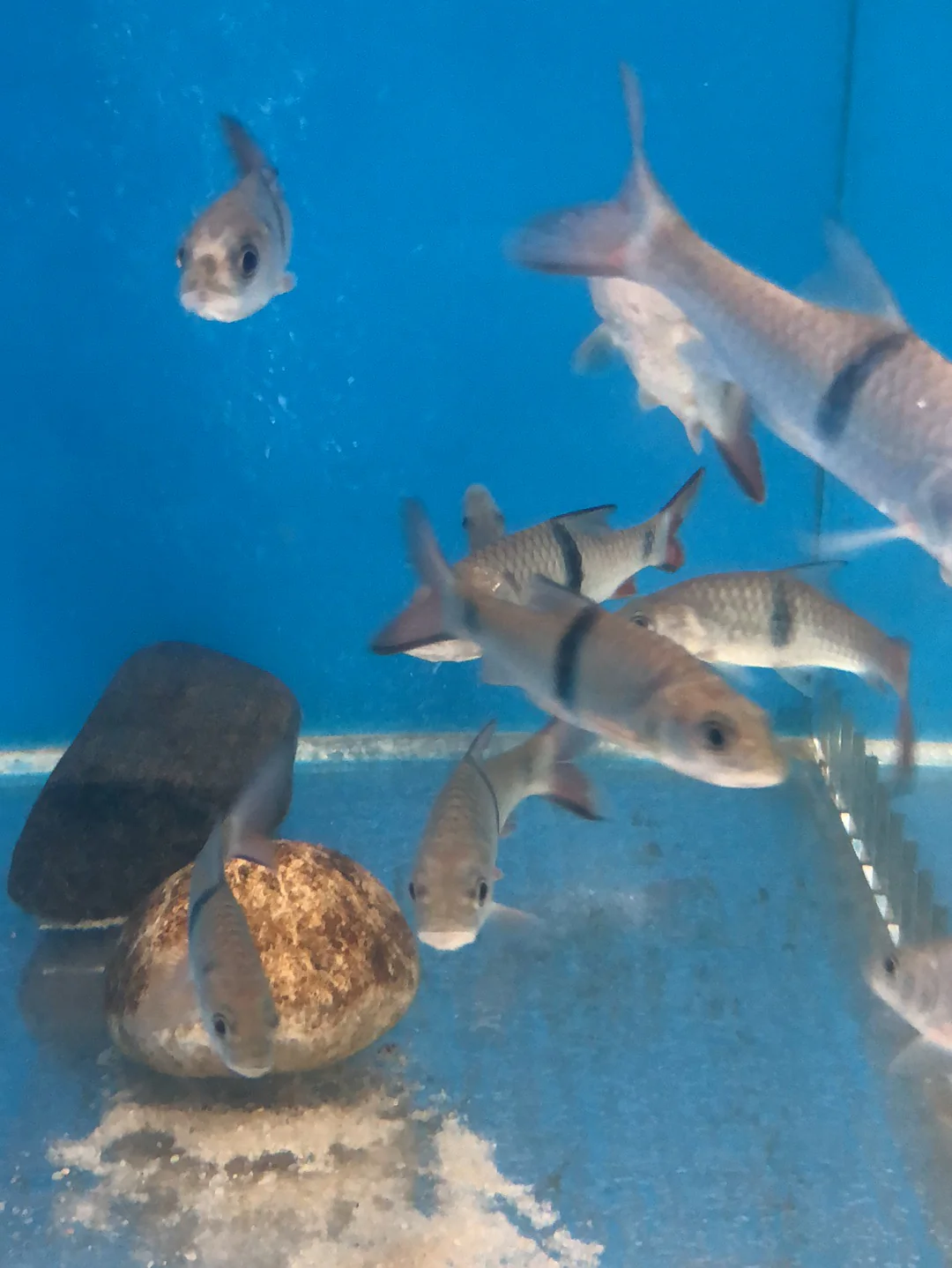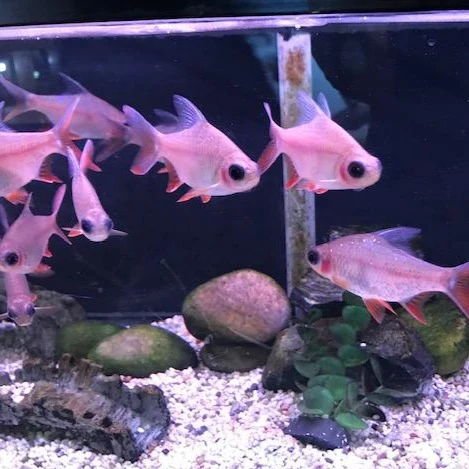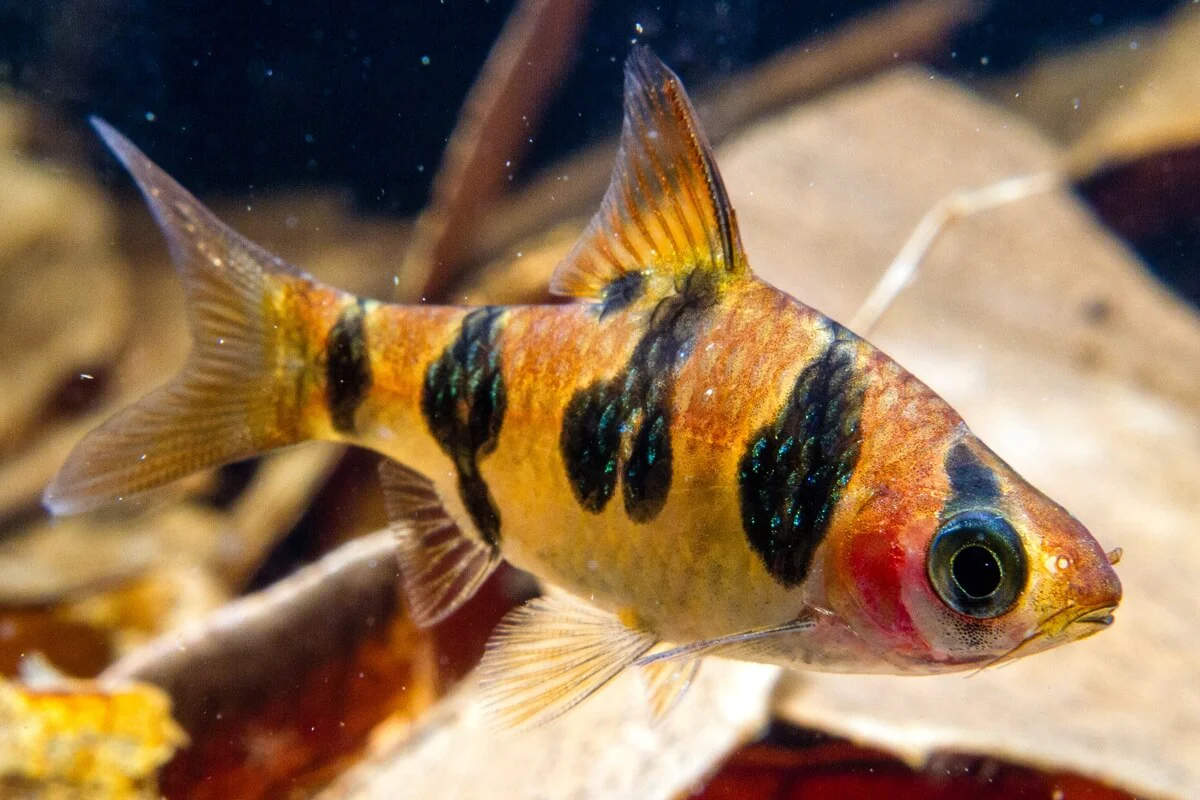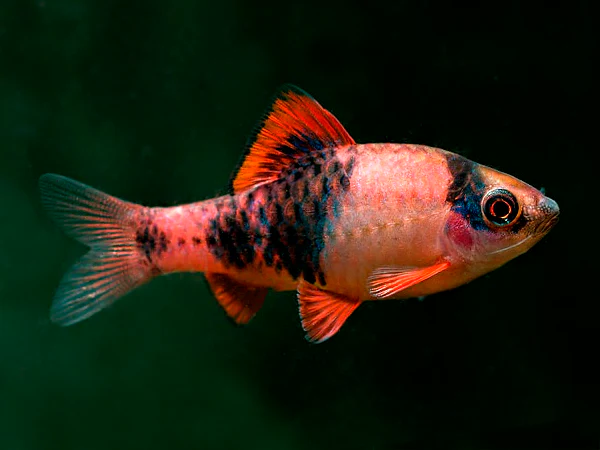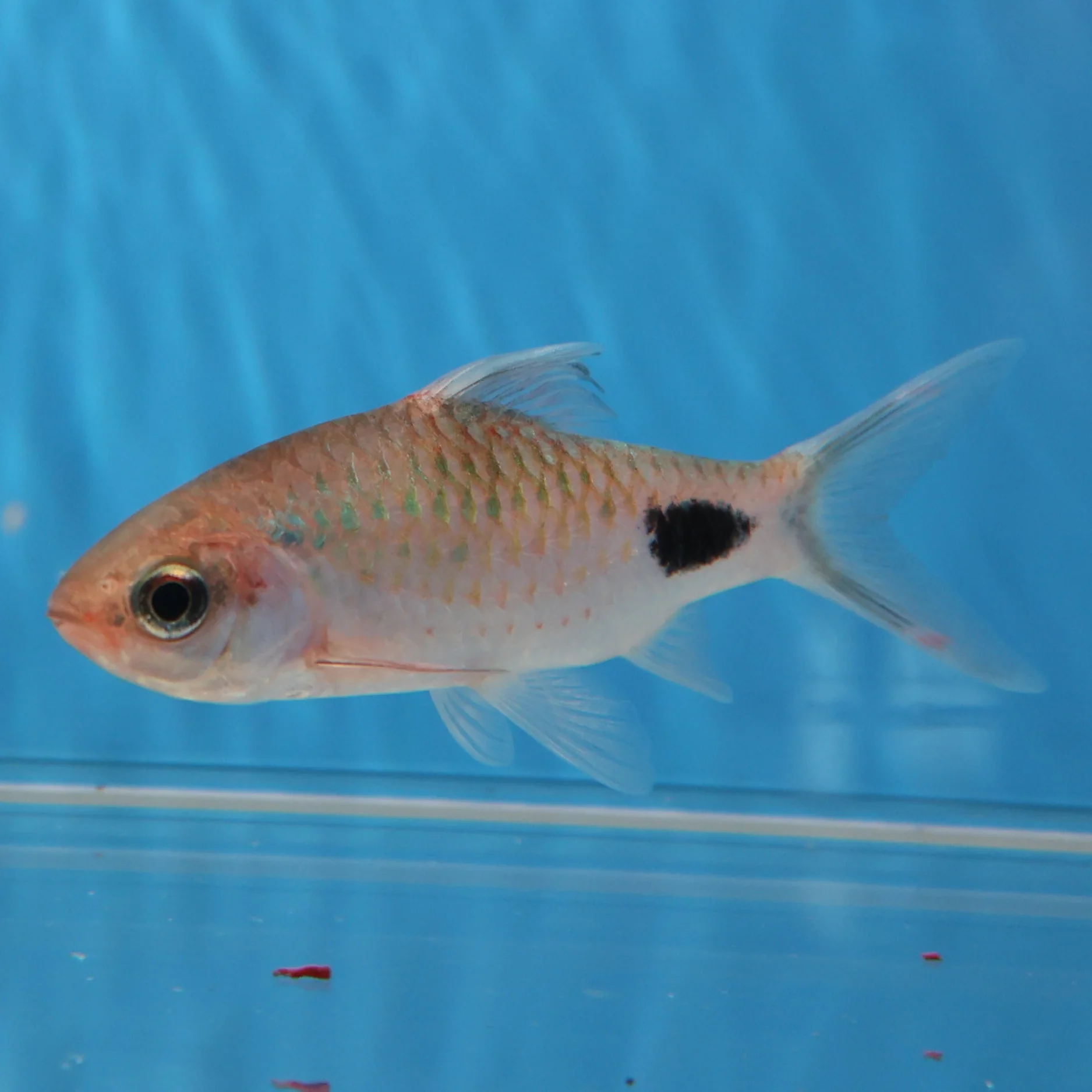
Filament Barb (Dawkinsia filamentosa)
Filament Barb (Dawkinsia filamentosa)
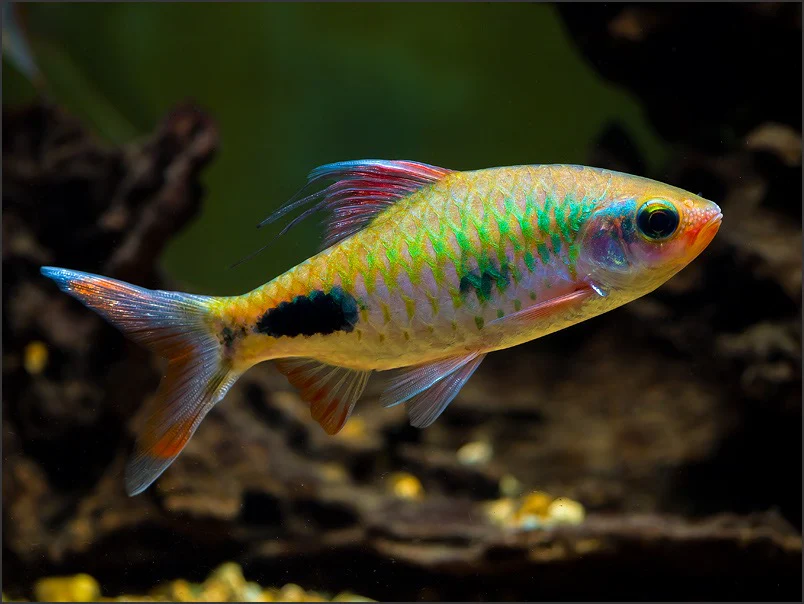
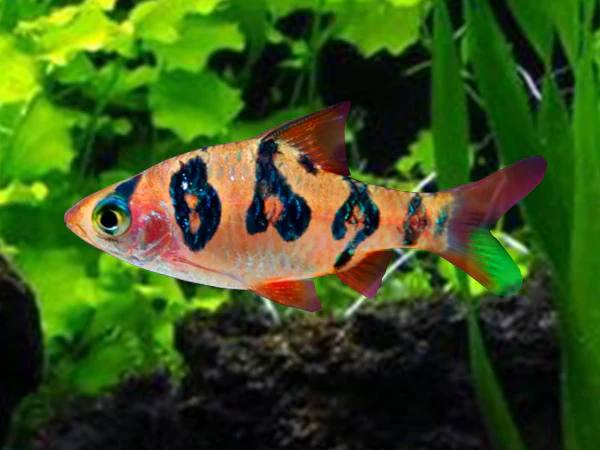
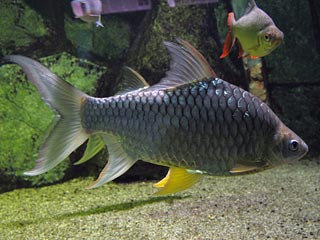
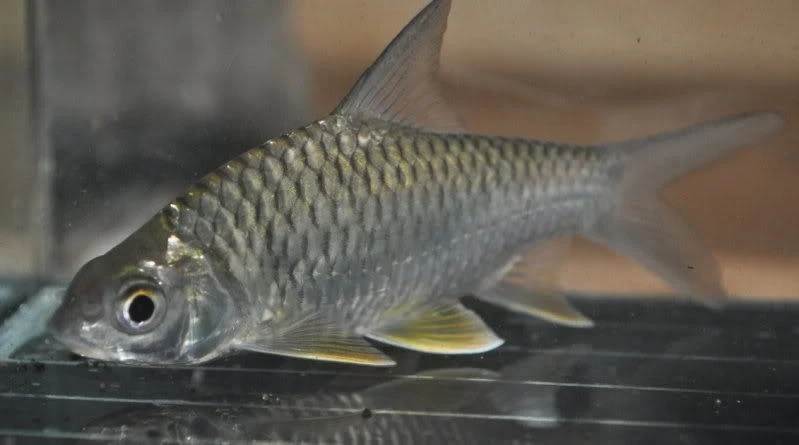
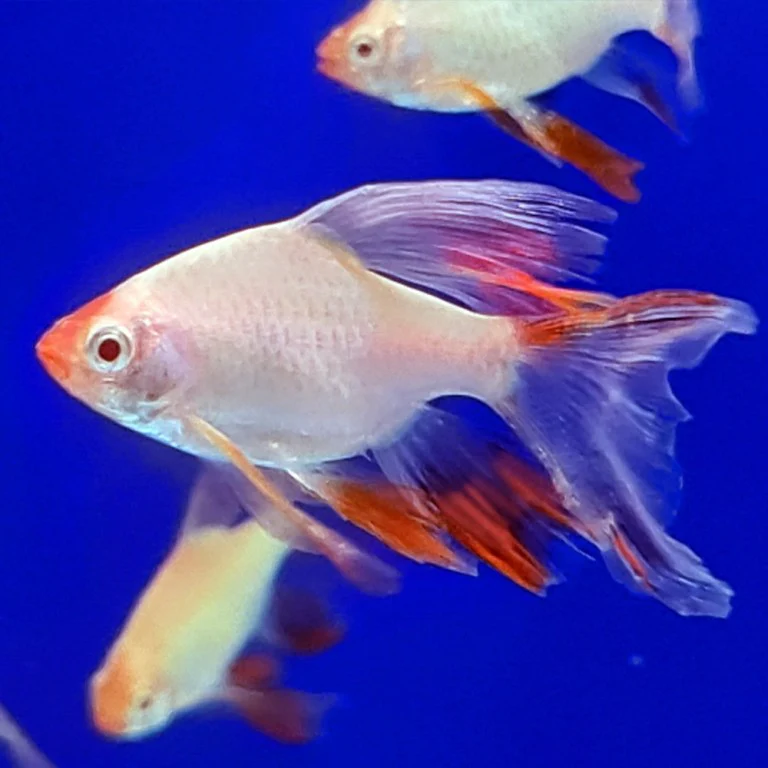
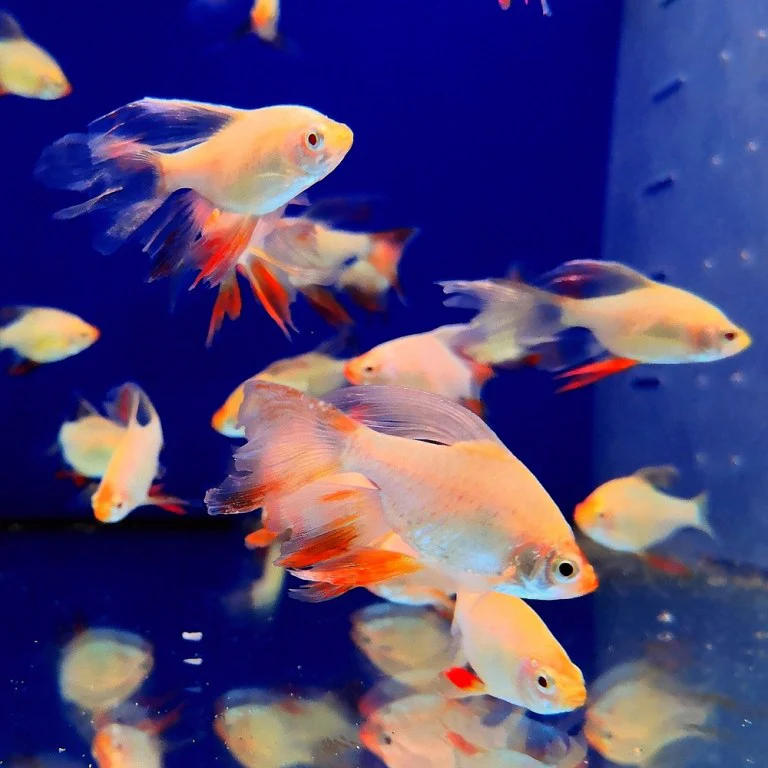
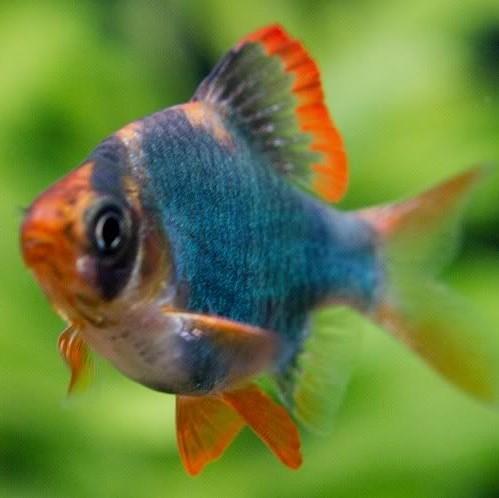
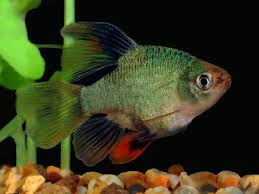
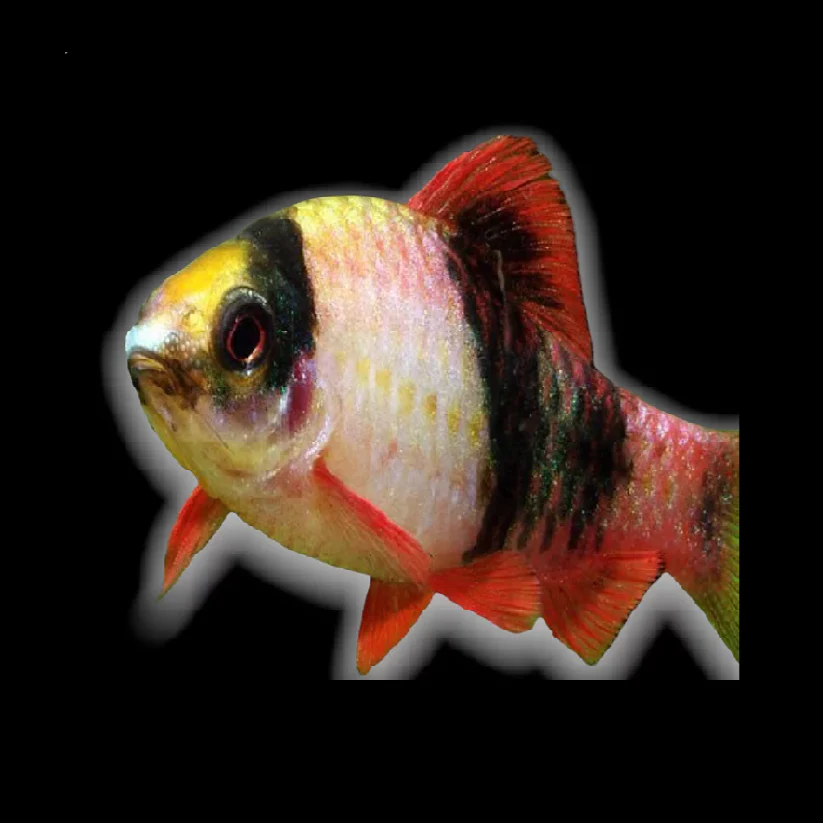
The Filament Barb is a lively and attractive freshwater species known for its shimmering body, subtle coloration, and the long filament-like extensions that develop on the dorsal fin of mature males. Native to fast-flowing rivers in India, this active schooling fish adds constant movement and natural beauty to larger community aquariums. Hardy and adaptable, Filament Barbs are a great choice for aquarists looking to add energy and character to their setup.
Diet
Filament Barbs are omnivorous and easy to feed:
- High-quality flakes or small pellets
- Frozen foods (bloodworms, brine shrimp)
- Vegetable matter (spirulina, blanched greens)
- Occasional live foods
A varied diet enhances coloration and overall health.
Tank Requirements
- Minimum Tank Size: 55–75 gallons (for a group)
- Water Type: Freshwater
- Temperature: 72–79°F
- pH: 6.0–7.5
- Setup: Open swimming space with plants and driftwood; moderate to strong flow preferred
Best kept in groups to encourage natural schooling behavior.
Size
- Current Sale Size: Typically 2–3 inches
Max Size
- Maximum Adult Size: 5–6 inches
Tank Mates
Generally peaceful but active:
- Compatible: Other barbs, rainbowfish, larger tetras, gouramis, and peaceful cichlids
- Use caution: With slow-moving or long-finned fish (may nip fins)
- Avoid: Very small or delicate species
Keeping them in groups of 5+ helps reduce aggression and fin-nipping.
Temperament
Peaceful to semi-active. Energetic swimmers that thrive in groups and bring constant motion to the aquarium.
Filament Barb (Dawkinsia filamentosa)
The Filament Barb is a lively and attractive freshwater species known for its shimmering body, subtle coloration, and the long filament-like extensions that develop on the dorsal fin of mature males. Native to fast-flowing rivers in India, this active schooling fish adds constant movement and natural beauty to larger community aquariums. Hardy and adaptable, Filament Barbs are a great choice for aquarists looking to add energy and character to their setup.
Diet
Filament Barbs are omnivorous and easy to feed:
- High-quality flakes or small pellets
- Frozen foods (bloodworms, brine shrimp)
- Vegetable matter (spirulina, blanched greens)
- Occasional live foods
A varied diet enhances coloration and overall health.
Tank Requirements
- Minimum Tank Size: 55–75 gallons (for a group)
- Water Type: Freshwater
- Temperature: 72–79°F
- pH: 6.0–7.5
- Setup: Open swimming space with plants and driftwood; moderate to strong flow preferred
Best kept in groups to encourage natural schooling behavior.
Size
- Current Sale Size: Typically 2–3 inches
Max Size
- Maximum Adult Size: 5–6 inches
Tank Mates
Generally peaceful but active:
- Compatible: Other barbs, rainbowfish, larger tetras, gouramis, and peaceful cichlids
- Use caution: With slow-moving or long-finned fish (may nip fins)
- Avoid: Very small or delicate species
Keeping them in groups of 5+ helps reduce aggression and fin-nipping.
Temperament
Peaceful to semi-active. Energetic swimmers that thrive in groups and bring constant motion to the aquarium.
Original: $12.00
-65%$12.00
$4.20Description
Filament Barb (Dawkinsia filamentosa)
The Filament Barb is a lively and attractive freshwater species known for its shimmering body, subtle coloration, and the long filament-like extensions that develop on the dorsal fin of mature males. Native to fast-flowing rivers in India, this active schooling fish adds constant movement and natural beauty to larger community aquariums. Hardy and adaptable, Filament Barbs are a great choice for aquarists looking to add energy and character to their setup.
Diet
Filament Barbs are omnivorous and easy to feed:
- High-quality flakes or small pellets
- Frozen foods (bloodworms, brine shrimp)
- Vegetable matter (spirulina, blanched greens)
- Occasional live foods
A varied diet enhances coloration and overall health.
Tank Requirements
- Minimum Tank Size: 55–75 gallons (for a group)
- Water Type: Freshwater
- Temperature: 72–79°F
- pH: 6.0–7.5
- Setup: Open swimming space with plants and driftwood; moderate to strong flow preferred
Best kept in groups to encourage natural schooling behavior.
Size
- Current Sale Size: Typically 2–3 inches
Max Size
- Maximum Adult Size: 5–6 inches
Tank Mates
Generally peaceful but active:
- Compatible: Other barbs, rainbowfish, larger tetras, gouramis, and peaceful cichlids
- Use caution: With slow-moving or long-finned fish (may nip fins)
- Avoid: Very small or delicate species
Keeping them in groups of 5+ helps reduce aggression and fin-nipping.
Temperament
Peaceful to semi-active. Energetic swimmers that thrive in groups and bring constant motion to the aquarium.